

To Cut Through The Noise: This Week in 60-Seconds
Stress injury claims among Ontario’s public safety workers rose 35% in five years, costing taxpayers $35M annually—an estimated $100M+ nationwide.
Most injuries aren’t from dangerous calls but from red tape and burnout.
Every resignation or retirement erases hard-earned lessons—what’s called institutional amnesia.
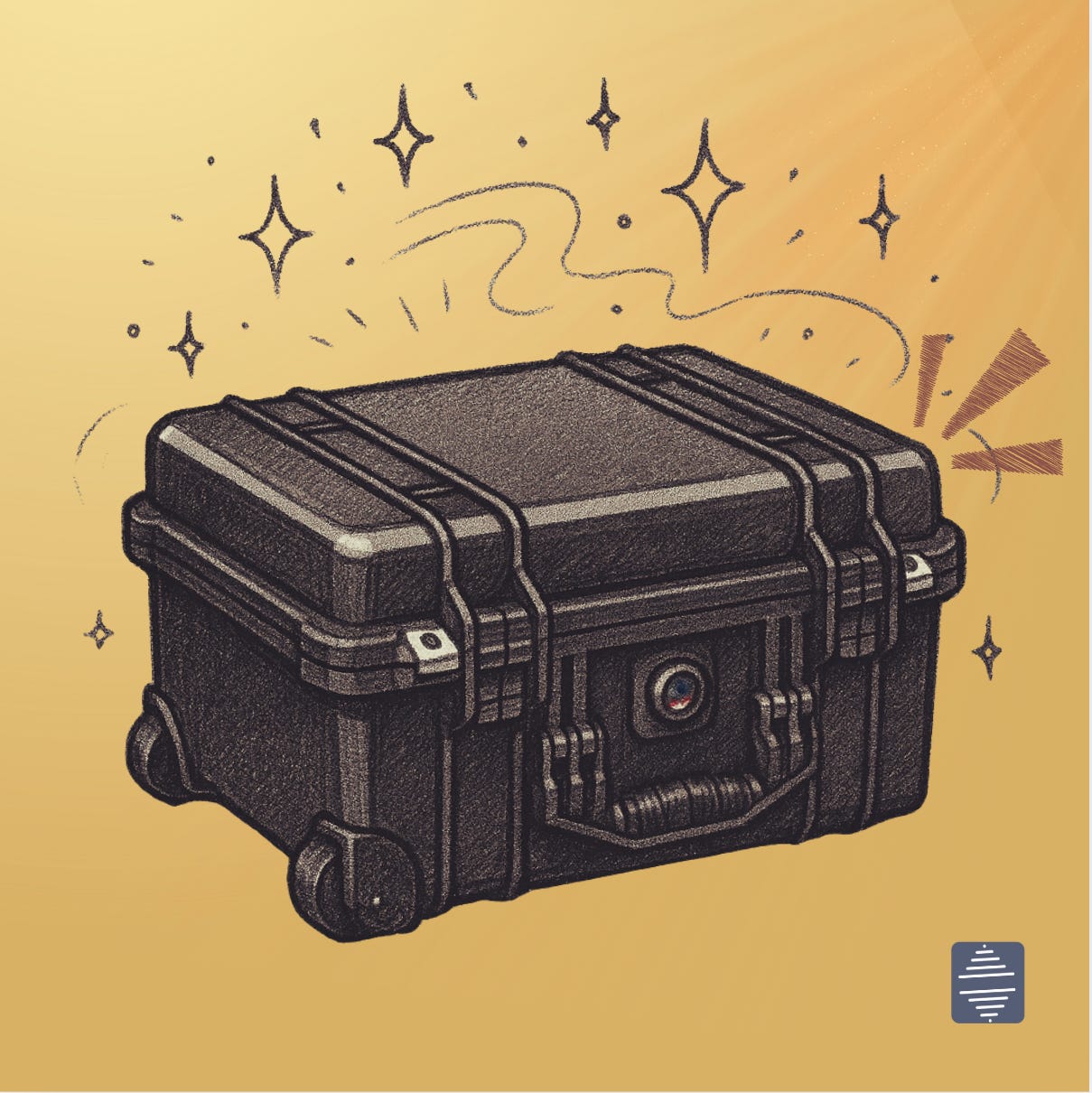
Frontline Peer is building a Black-Box Memory Bank to capture those lessons before they vanish.
Our Echo Program lets workers share stories anonymously, turning them into memes, narratives, and insights that cut hidden costs and improve culture.
On September 15 in Halifax, we pitch at Falling Walls Atlantic—taking this solution international.
What happens when an airplane crashes?
In aviation, the black box preserves data so disasters aren’t repeated. It’s called organizational learning¹. Simply put, it’s about learning from failure.
We’re taking that same idea to public safety—because right now, the very people sworn to protect us are breaking down. Police, paramedics, firefighters, 911 dispatchers—who dedicate their lives to serving others—endure alarming rates of PTSD, burnout, and fractured families pile up.
In Ontario alone, paid stress injury claims rose 35% in just five years², now costing an estimated $35 million annually. Scale that nationally and the burden tops $100 million of your hard-earned tax dollars each year! But the real cost? Lives cut short, families broken, communities left less secure.
Here’s the irony: most injuries don’t come from dangerous calls but from red tape. It’s the cumulative strain of endless paperwork, organizational strife, and—most corrosive—reticence baked into the culture.
Silence, the absence of psychological safety³, breeds what scholars call institutional amnesia. Every time someone burns out or retires, hard-earned knowledge disappears from the organization they leave. It’s like burying one’s head in the sand when decision-making matters most: call it the “Ostrich Paradox”⁴.
That’s why next week, our founder Mike Taylor will take the stage at Falling Walls Atlantic in Halifax, pitching our social venture on an international platform.
Frontline Peer is building a Black-Box Memory Bank for public safety—a system to capture stories, lessons, and insights before they vanish. As Lamont reminds us, recognition isn’t a luxury, it’s a prerequisite to well-being⁵.
Our Echo Program is live now. It accepts anonymous submissions from public safety workers who want to tell their real stories. Research shows that when privacy is protected, people speak up⁶. Echo turns those stories into cultural assets—memes that cut through jargon, narratives that validate lived reality—that organizations can use to cut hidden costs and improve culture by incorporating human-centered design.
We’re gaining traction through a growing subscriber base, and now, a stage. Recognition at the international level is within reach.
Our value proposition is threefold:
Workers gain recognition, dignity, and a voice.
Organizations get actionable insights to cut turnover and hidden costs.
Society builds trust, resilience, and innovation.
Frontline Peer is transforming silence into conversation, secrecy into dialogue, and amnesia into resilience.
Subscribe, share, and spread the word. Visit FrontlinePeer.com—submit a story, or tell a colleague what the Black-Box Memory Bank could hold.

Notes
1 Edgelow, M. & Fecica, A. Occupational therapy treatment of public safety personnel with work-related psychological injuries: analyzing Ontario worker’s compensation data from 2017–2021. Frontiers in Psychiatry 15 (2025). https://doi.org/10.3389/fpsyt.2024.1377157
2 Norman, M. & Ricciardelli, R. Operational and organisational stressors in community correctional work: Insights from probation and parole officers in Ontario, Canada. Probat Journal 69, 86-106 (2022). https://doi.org/10.1177/0264550520984253
3 Nonaka, I. & Von Krogh, G. Perspective—Tacit knowledge and knowledge conversion: Controversy and advancement in organizational knowledge creation theory. Organization science 20, 635-652 (2009).
4 Regoli, R., Poole, E. & Schrink, J. Occupational Socialization and Career Development: A Look at Cynicism Among Correctional Institution Workers. Human Organization 38, 183-187 (1979). https://doi.org/10.17730/humo.38.2.x061g4w710v2022h
5 Schultz, W. Unspoken commandments: Contemporary correctional officer work cultures and their influence on prison conditions Doctor of Philosophy thesis, University of Alberta, (2023).
6 Christie, N. Conflicts as property. British Journal of Criminology 17, 1-15 (1977). https://doi.org/10.1093/oxfordjournals.bjc.a046783
7 Dekker, S. Just Culture: Restoring Trust and Accountability in Your Organization (CRC Press, Boca Raton, FL, 2017).
8 Montoya-Barthelemy, A. et al. Occupational and Environmental Hazards of Correctional Settings: A Scoping Literature Review From ACOEM's Presidential Task Force on Correctional Institutions. J Occup Environ Med 64, e172-e182 (2022). https://doi.org/10.1097/JOM.0000000000002440
9 McGann, M. & Ball, S. Beyond administrative burden: Activation and administrative harm. Australian Journal of Social Issues (2024). https://doi.org/10.1002/ajs4.371
10 Taylor, M. P., Ricciardelli, R. & Spencer, D. C. Parole work in Canada: The realities of supervising “sex offenders”. Probation Journal 72, 46-67 (2024). https://doi.org/10.1177/02645505231223173