



In the companion article to this piece, “Bug or Feature? What ‘Jail, Not Bail’ Gets Wrong About Justice”, I argued that the current debate around bail in Canada — driven by Pierre Poilievre’s JRE appearance, CBC’s Front Burner, and the political momentum behind Bill C-14 (Bail and Sentencing Reform Act) — collapses a vast and contradictory system into a slogan.
That article challenged the framing.
This one looks underneath it.
Since the bail system is not a standalone mechanism, it is one node in a much larger assemblage — that includes policing, prosecution, pre-trial negotiation, sentencing, incarceration, and community supervision. Each of these institutions has its own logic, its own incentives, and its own way of shaping the lives that pass through it. And the most consequential of them is, paradoxically, the one that is almost never discussed in public.
The Secret Architecture of Plea Deals
There is a dimension to this assemblage that rarely surfaces in public discourse, despite the fact that it determines the vast majority of outcomes: the plea deal.
Formally, this might be called something else — “pre-trial resolution,” for example. And although it’s hardly a ‘deal’ in favour of citizenry, it is nevertheless an arrangement often experienced as coercive and unjust.
The vast majority of Canadian criminal cases that do not go to trial are resolved via guilty pleas, many following some form of resolution discussion, and several Canadian reports estimate this share to be on the order of 90%. In the United States, the figure exceeds ninety-five percent.
Federal Judge Jed Rakoff, in Why the Innocent Plead Guilty and the Guilty Go Free, has documented how the plea bargain system has effectively transferred sentencing power from judges to prosecutors. This has produced what he describes as a “virtual extinction” of jury trials — down from nineteen percent of federal cases in 1980 to less than three percent by 2010, where it has remained.
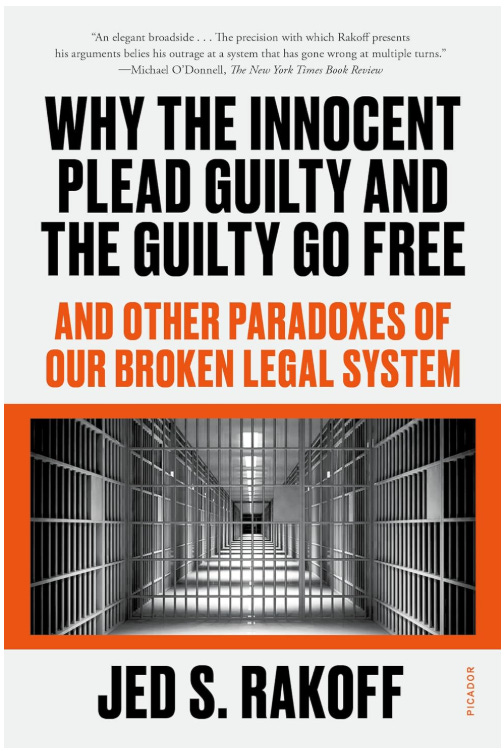
The mechanism is straightforward and coercive. A person is arrested. Bail is set high enough that they are detained — despite the constitutional prohibition on excessive bail. Their defence lawyer, often meeting them for the first time at arrest, has limited access within the restricted visiting hours and arduous conditions of provincial jails. The prosecutor, meanwhile, charges the most severe offences that can be proven — unless the defendant agrees to plead guilty, promptly, to reduced charges.
The result is what Rakoff calls a “trial penalty.” Those who exercise their constitutional right to a trial and are found guilty receive substantially harsher sentences than those who accept a deal. The Supreme Court’s characterization of plea bargains as fair and voluntary contracts between relatively equal parties is, in Rakoff’s assessment, a “total myth.” It is closer to a contract of adhesion — one party dictating terms to the other.
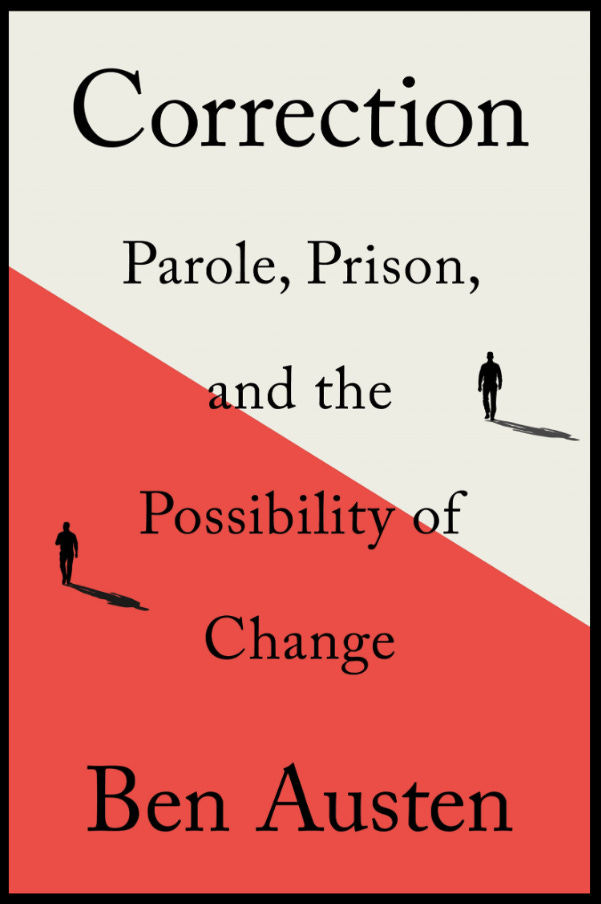
Ben Austen captures this dynamic in Correction: Parole, Prison, and the Possibility of Change, observing that plea deals jumped from about eighty percent of criminal cases in the 1970s to ninety-five percent in subsequent decades. As Austen notes, a common joke in criminal justice circles is that you see more criminal trial rulings on TV in any given week than in the nation’s courtrooms.
This is an epistemological problem as much as a legal one.
Plea negotiations occur under solicitor-client privilege. They are inherently secret. We do not know, and cannot easily study, how many of these dispositions involve factual innocence, trumped-up charges designed to create bargaining leverage, or simply the rational calculus of a person choosing thirty days over a year of awaiting trial in conditions that defence lawyer Nader Hasan described as squalid and that judge after judge has described as unconscionable.
What we do know is that the daily docket of Canadian courts operates as an efficiency metric, not an effectiveness metric. The incentive is to move cases through, not to arrive at truth. Scholars like Nicole Myers have documented how the presumption of innocence has been functionally eroded in bail courts, where adjournments, procedural delays, and a culture of throughput render the daily docket a machinery of expediency rather than a forum for justice. When the system prioritizes throughput over accuracy, it is the most vulnerable — the unrepresented, the detained, the mentally ill, the addicted — who bear the cost.
Defence lawyer Hilary Dudding, on CBC’s Front Burner, put it plainly:
“If you’re faced with a year-long or more wait for a trial, but the prosecutor says, well, why don’t you plead guilty to a 30 day jail sentence, you could get out today ... Who would wait a year just to avoid that conviction?”
Who indeed. And what does it mean for the integrity of every statistic built on conviction rates when we know that the vast majority of those convictions were negotiated, not adjudicated?
Crime Control as Industry
The Norwegian criminologist Nils Christie argued decades ago that modern societies have turned crime control into a self-expanding industry — one that treats offenders as raw material and prisons as a growth market, sustained by political and economic interests rather than by actual crime levels. Christie’s thesis, articulated in Crime Control as Industry, is not a conspiracy theory. It is a structural analysis. When lawyers, judges, court reporters, bail supervisors, probation officers, correctional officers, managers, ministries, and the leadership that governs them all depend for their livelihoods on the continued existence of the system, there is a powerful — if largely unconscious — incentive for the system to perpetuate itself.
This is not to impugn the motives of individual workers. Many of them — I was one of them — enter the field because they want to help. But the structure within which they operate is not designed to shrink. It is designed to grow. And growth, in this context, requires a steady supply of human beings who have been classified as problems requiring management.
Christie also wrote about “conflicts as property” — the idea that the justice system steals disputes from the people involved and processes them through institutional machinery that serves the institution’s interests more than it serves the parties to the conflict.
The victim becomes a witness for the state. The accused becomes a case number. And the relational, human, deeply contextual nature of what happened between them is abstracted into charges, dockets, and sentencing guidelines. Austen illustrates this vividly in Correction: decades into a prison sentence, one person he profiles talked about the harm he’d caused, but it was as if he was speaking into the wind — by law, he couldn’t tell the actual people he hurt that he recognized the grief he’d caused. Prison, in a way, insulated him from taking responsibility for his crime.
The system separates rather than connects. It processes rather than listens. And it calls this justice.
Governing for the Outlier
Why do we do this? Why does social policy chronically focus downstream — on emergency rooms, on police responses, on carceral interventions — rather than upstream, on the conditions that produce the crises in the first place?
Part of the answer is cognitive.
The availability heuristic — a well-documented bias in which vivid, emotionally charged events loom disproportionately large in judgment and memory — ensures that a single horrifying case of someone out on bail committing another offence will shape public opinion more than a thousand cases of uneventful compliance.
As Shakir Rahim of the CCLA observed, nobody reports on the thousand people who met their bail conditions last month. It is both less arousing and more affectively engaging to focus on instances of sensational failure than on the quiet reality of a system that, for most people most of the time, functions without incident. Research on upstream approaches to social problems has long documented how this dynamic pushes resources toward visible emergency responses and away from the structural determinants that produce the emergencies in the first place.
Part of the answer is structural.
Institutions are locked into existing downstream infrastructures and funding streams — a form of path dependence. It is politically and administratively easier to add more prison capacity than to redesign housing, labour markets, mental health systems, or social protection. The visible crisis attracts the resources. The invisible upstream determinant remains abstract — until it produces another visible crisis.
And part of the answer is ideological.
Social policy in Canada, as in much of the Western world, tends to individualize social problems — to attribute poor outcomes to personal choices rather than structural conditions. This is the logic that Pierre Poilievre taps into when he said that if we just “take them off the street,” we can “reduce the crime rate dramatically.” It presupposes that crime is a characteristic of certain individuals, rather than a behaviour that emerges from certain conditions — conditions that the state itself has, in many cases, created or failed to address.
Poilievre, to his credit, even gestured toward this on the JRE podcast, acknowledging that the people cycling through the justice system are often the same people cycling through emergency rooms. But he drew the opposite conclusion from the one the evidence supports. Rather than seeing this overlap as evidence that criminal behaviour is downstream of health, housing, and social marginalization, he saw it as evidence that a small number of defective individuals need to be permanently removed.
This is the fundamental attribution error applied to an entire population. And it is precisely the kind of thinking that Christie warned would sustain the industry of crime control indefinitely.
The Cobra Effect (Perverse Incentives)
There is a parable in policy studies called the Cobra Effect. During British colonial rule in India, the government offered a bounty for dead cobras to reduce their population. Enterprising citizens began breeding cobras to collect the bounty. When the government discovered this and cancelled the program, the breeders released their now-worthless cobras, and the population increased beyond where it had started.
The current push toward tougher bail laws risks precisely this kind of perverse outcome. Bill C-14, the Bail and Sentencing Reform Act, is designed to make bail harder to obtain. It expands reverse-onus provisions, clarifies that the principle of restraint is not a “get out of jail free card,” and adds offences to the list requiring the accused — rather than the Crown — to demonstrate why they should be released.
As discussed in “The Bail Backlash,” retired Crown prosecutor Mike Murray supports the bill. Six Nations Police Chief Darren Montour wants it to go further. And defence lawyers like Nader Hasan predict it will lead to more people being detained, more bail hearings, more aggressive Crown postures, and — critically — more overcrowding in provincial facilities that are already operating beyond capacity under conditions that judges have repeatedly condemned.
The Front Burner episode ended by surfacing a judgment from January 2026, in which a judge reviewing conditions at a major provincial detention facility knocked more than a year and a half off a man’s sentence because of the conditions of his pre-trial detention. In her reasoning, the judge wrote that such reductions are becoming the norm rather than the exception, and asked:
“Politicians continue to urge that fewer people be released on bail and stiffer sentences be imposed on those found guilty of offences. My question is where are these people meant to go?”
This is the Cobra Effect in real time.
The political demand for toughness produces overcrowding, which produces sentence reductions, which produces the perception of leniency, which produces further demands for toughness. The system does not correct. It oscillates. And with each oscillation, the gap between work-as-imagined and work-as-done widens — a gap borne disproportionately by the overworked officers, the overwhelmed lawyers, and the human beings housed in conditions that make rehabilitation not just unlikely but structurally impossible.
There is always a gap between the good intentions of legislation and the reality of its implementation. A premier or federal leader who signals toughness is not acting out of malice — often they are acting out of the same helplessness the public feels. But good intentions, when they meet complex systems, can produce perverse incentives, unintended consequences, and a recursive cycle in which the cure feeds the disease. Scholars of penal appetites have been describing this pattern for longer than I have been writing about it. What is new is the scale of the audience now receiving the simplified version.
What a System That Worked Would Look Like
In my years of casework, I had clients who, against all odds, turned their lives around. They checked in, they did the work, they built something from the wreckage. And almost invariably, the ones who made it described the same desire: to help others going through what they had survived. To coach, to mentor, to guide. To become, in a word, what a community corrections worker aspires to be — someone who walks beside you.
This is not a sentimental observation. It is a design principle. A system that genuinely rehabilitated would produce graduates who could lead the next cohort. It would build in feedback from the people who have actually experienced its interventions — not as an afterthought, but as a core mechanism of organizational learning. It would be designed to shrink over time, not to grow. And it would measure its success not by how many people it processes, but by how few it needs to.
Imagine, for a moment, someone who has been through the system — accused, detained, convicted, supervised, and eventually released. Imagine they have done the difficult, invisible work of rebuilding their life. At present, this person has no meaningful channel through which to feed their experience back to the system that shaped them. In theory, complaint mechanisms exist — ombudspersons, correctional inspectorates, formal grievance processes. But these bodies typically lack enforcement teeth, and the culture of corrections is one of reticence: self-identifying as a critic of a system that still holds power over your record, your conditions, and your reputation is a risk most people rationally choose not to take.
There is no exit survey from parole or probation. There is no feedback loop that says, How did we do? What helped? What harmed? The system extracts information — through pre-sentence reports, risk assessments, case notes — but it is never changed by what it extracts.
A well-organized system is one that understands itself. That formulation keeps returning to me because it captures what is missing. Understanding requires listening. It requires what Epictetus gestured toward two millennia ago — hearing twice as much as we speak.
That kind of system would threaten every incentive structure currently in place. It would challenge budgets, bureaucracies, careers, and — most importantly — the story we tell ourselves about who those people are.
Because here is the uncomfortable truth at the centre of all of this: “criminals” remain one of the last social groups it is openly acceptable to loathe, to dehumanize, to treat as categorically different from the rest of us. We have, rightly, developed norms against discrimination based on race, gender, sexuality, disability, and religion. But conviction — or even accusation — strips a person of the moral consideration we afford to everyone else.
As Austen documents in Correction, the United States has created a rigid caste system in which felony convictions produce cascading barriers to employment, housing, public assistance, voting, and jury service. Canada’s version is softer in degree but identical in kind.
And the bail system is the front door. It is the purgatory through which anyone who has an allegation made against them might pass. Police do not need proof beyond a reasonable doubt to lay a charge. They need reasonable and probable grounds. You can be charged on someone’s word alone.
Which means that the distance between you and that purgatory is shorter than you think.
A System That Understands Itself
I began the first article in this series with a question borrowed from software engineering: is this a bug or a feature? Is the criminal justice system malfunctioning, or is it producing exactly the outcomes it was built to produce?
I think it’s both. The people within the system — the officers, the lawyers, the judges, the social workers — are overwhelmingly trying to do good work under impossible conditions. They are burnt out, overworked, under-resourced, and operating within organizational structures that prioritize compliance over meaning. This is the gap between work-as-imagined and work-as-done — a gap I have spent my doctoral research and my career trying to understand.

But the system itself is not designed to learn from the people it processes. It is designed to process them. It has no meaningful feedback loop from its clientele to its decision-makers.
Right now, we are doing the opposite of listening. We are speaking over the people who know the most about what the system actually does to human beings. We are letting slogans substitute for understanding. We are letting the availability of horror stories substitute for data. And we are allowing politicians to offer incapacitation as if it were wisdom, when what it actually is — and what it has always been — is the most expensive, least effective, and most humanly devastating option available.
A justice system worth the name would be one that, over time, needed less of itself. Not because it ignored harm, but because it addressed the conditions that produce it. Not because it was soft, but because it was intelligent — responsive to feedback, honest about its failures, and humble enough to learn from the people it has processed.
That system does not yet exist. But imagining it is the first step toward building it. And refusing to accept the slogan is the first step toward imagining it.

Have a story to tell? Frontline Peer™ exists because the people closest to the justice system — workers, families, and those who have lived through it — are rarely the ones shaping the public conversation. If this article moved you, I want to hear from you. Share it. Comment. And if you have a story of your own — from either side of the system — reach out directly. Your experience is not anecdotal. It is evidence. And it belongs in this conversation.
