


Weekly Dispatch: Cut Through The Noise in 60-Seconds
Falling Walls: No win, but a clearer mechanism for success.
Get clear on “Peer”: Collegial debriefing + P2P network architecture + academic peer review.
Discovery initiative : Stay tuned for upcoming opportunities for probation, parole, and other frontline workers to contribute—and get paid.
Halifax Debrief
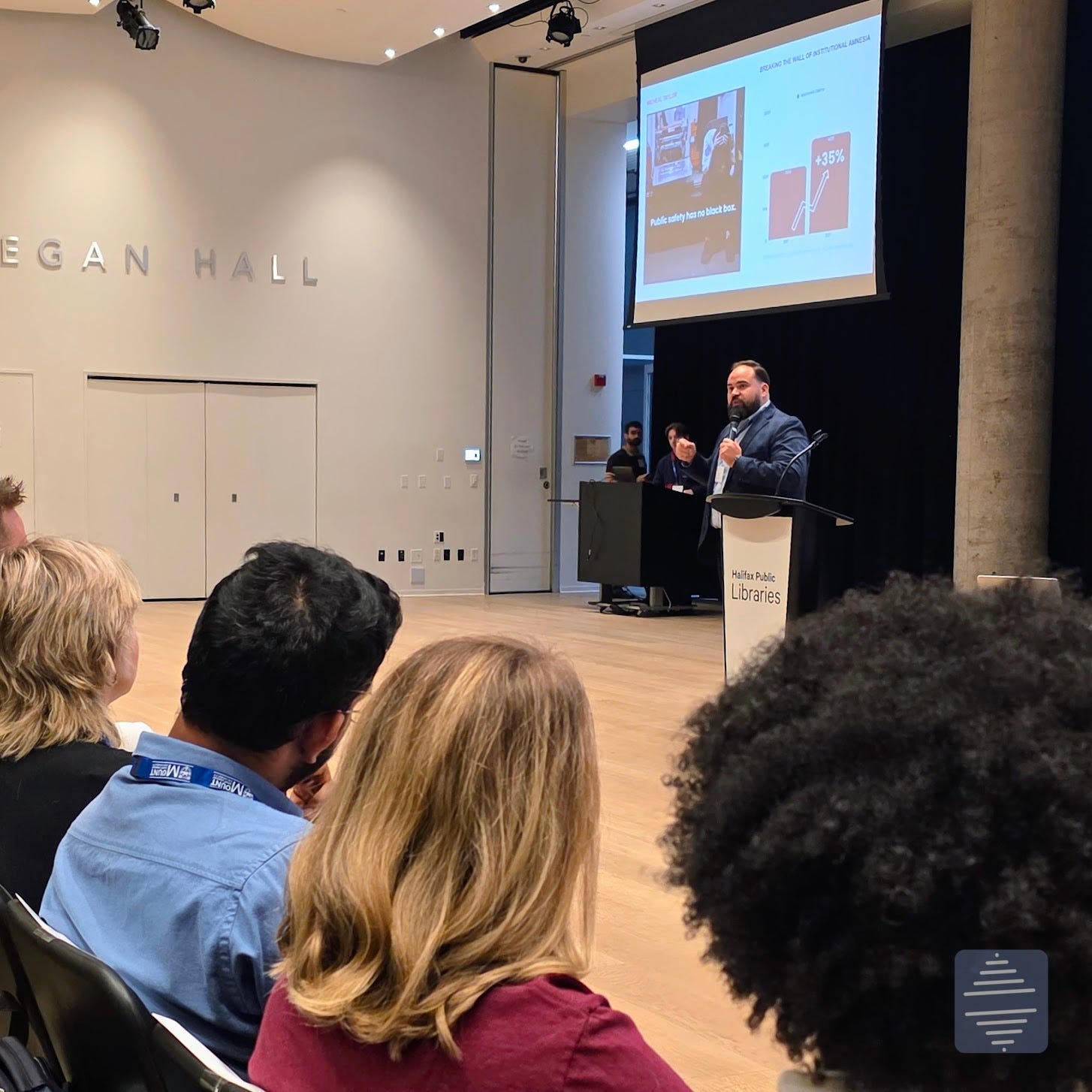
The Falling Walls pitch competition, featured in last week’s post, was quick, sharp, and merciless—three minutes of stage time. Just enough to explain why “peer” means more than chatting with your buddy.
As the saying goes: you win, or you learn. We didn’t win, so here’s some hard-earned wisdom.
People seem to think our social enterprise is merely about ‘peer support’. They imagine the usual pat on the back after a critical incident—“You good?”—followed by the automatic “Yep.” Curtain falls, problem solved. Right?
But that script is broken. It props up silence, rewards stoicism, and trains people to believe that keeping quiet is the only safe move. It soothes individuals while leaving the system untouched.
We’re after a fundamental redesign. At Frontline Peer, we’re flipping the script to champion “peer” for 21st-century operations. Think of the concept in 3D:
Collegial debriefing—real conversations with professionals who ‘get it’ where truthful candor advances your career rather than sinks it1.
Peer-to-peer architecture—decentralized information sharing (think BitTorrent or blockchain) where professionals are both clients and servers, uploading and downloading hard-won wisdom, in real time.
Peer review—the rigorous, double-blind, academic kind. Ideas tested on substance, not on rank, title, or how shiny the badge is on your chest.
Put together, what we’re building is an infrastructure that combines all three. It’s psychological safety meets organizational responsivity: a system that listens, learns, and adapts instead of repeating the same old face-palms.
So here’s to rebranding peer—not as a hug or as a hotline—but as a living network where frontline perspectives generate collective intelligence, and public safety organizations finally catch up to the contemporary century.
Learn more about these ideas in a recent article I published, below.

Key Takeaways, and What’s Next:
Our Echo program is live—but so far, no takers. That’s not failure, that’s feedback.
So we’re tightening the screws and launching another round of client discovery. We’ll be reaching out to a few folks directly for one-on-one calls to figure out how to meet line staff on terms they recognize to be meaningful. If that sounds like you, don’t wait for an invitation—jump in now:
Feedback form — remain anonymous, no contact info required.
Book a discovery call — speak with me directly about what’s on your mind.
Submit to Echo — share your anecdotal evidence today and see where we take it. But, this does require your trust, which is why we’re transparent about our terms of service and the safeguards to keep contributors secure.
In the meantime, we’re working on the right incentives and designing for well-being and organizational efficacy to build a system of recognition.
The point is simple: value should flow both ways. This is a mutual exchange—peers giving and taking like any real relationship worth keeping.
If you’ve got a story to get off your chest, consider submitting a text-based version through Echo, today. Or pass along the opportunity to someone who deserves to be heard.
In a room where people unanimously maintain a conspiracy of silence, one word of truth sounds like a pistol shot.
— Czesław Miłosz
Either way, we’ll keep you posted on new ways to get involved. And as always, the door’s open—questions, concerns, or just the urge to keep in touch?
Hit reply and keep the conversation going,

Micheal P. Taylor, Founder
www.frontlinepeer.com
Further Reading
“collegial debriefing” was a term coined after digging into interview data with parole officers. They weren’t asking for another round of peer support. But they did describe something deeper: conversations with peers who get it. Rank-light, career-safe spaces where the truth can surface without the usual filters. Read on in the article here:
Taylor, M. P., Ricciardelli, R., & Spencer, D. C. (2024). Parole work in Canada: The realities of supervising “sex offenders”. Probation Journal, 72(1), 46-67. https://doi.org/10.1177/02645505231223173